Success Stories

Results. Not Excuses.  Conservation Minnesota is making sure future generations can enjoy everything our state has to offer.  We’ve worked with Minnesotans on a wide range of successful campaigns that are making a real difference.  Whether it’s cleaner water, reducing waste, protecting wildlife, or getting more power from wind, we work for practical solutions that make us all better off in the long run.

Safe Drinking Water

It seems like a no-brainer: we shouldn’t dump our garbage in places where it will pollute our drinking water.  But until Conservation Minnesota partnered with Friends of Washington County in 2010, landfill siting rules didn’t sufficiently take groundwater sensitivity into consideration. We convinced the legislature to send the Pollution Control Agency back to the drawing board, and new, improved rules will be released by the end of 2011.

No Clear-Cutting of State Parks

Should we balance the state budget by turning some of our state parks into logging operations? During the 2011 legislative session a handful of legislators thought so, and a provision requiring the harvest of all black walnut trees in several state parks was added to the House environment budget bill. Within a few days, our media and grassroots outreach campaign resulted in hundreds of calls to legislators.  The full House promptly voted against the measure, protecting state parks from being clear-cut for profit.

Passing the Clean Water, Land, and Legacy Amendment

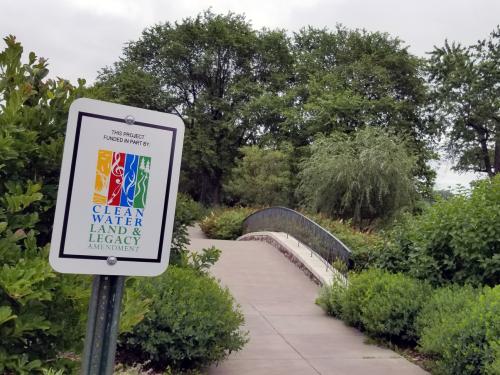
Conservation Minnesota played a lead role in passing the Legacy Amendment for more than four years.  Our State Budget Analysis first revealed the fact that conservation spending had reached a 30 year low. We executed a broad public campaign around the launch of our CheckMyLake.org website to let Minnesotans know that 40% of our tested lakes don’t meet water standards.  And our bi-partisan team advocated at the Capitol. After successful passage at the legislature, Conservation Minnesota worked to develop messaging, research, and voter data that were the centerpiece of a winning campaign strategy.  The Legacy Amendment is both the largest state conservation measure and the largest state arts funding measure in United States history.

Less Coal, More Wind and Sun

Conservation Minnesota worked with allies to pass Minnesota’s nation leading Renewable Energy Standard in 2007. Today, all of Minnesota’s utilities are on track to meet the state’s goal of getting 25% of our electricity from clean, renewable sources such as wind and solar by 2025. Despite this success, attempts to repeal the standard have been introduced every year. CM’s government affairs team has worked effectively with partners to block repeal of this important law. Read more about the Renewable Energy Standard.

Protecting Lake Superior

Conservation Minnesota worked with several partners to make Minnesota the first state to endorse the Great Lakes Compact in 2007. Now approved by each of the eight Great Lakes states and Congress, the compact prevents diversion of water from this state treasure to other parts of the country and the world. Read more about the Great Lakes Compact .

Statewide Electronics Recycling

In July 2006, a ban on landfilling of cathode-ray-tubes, such as televisions and computer monitors, went into effect in Minnesota. But a lack of statewide funding for collection and recycling of this electronic waste left the burden on consumers and local governments. After several years of disagreement, Conservation Minnesota helped pass a broadly supported consensus bill that required manufacturers to fund the program based on their market share. Find out more, including how to make sure your old products are recycled.

A New Park and New Transit – Finding a Win-Win for Minnesota

In 2007, Governor Pawlenty announced a plan to acquire and establish Lake Vermillion State Park, preserving five miles of pristine shoreland and over 2,500 acres of rugged Minnesota wilderness. At the same time, the DFL-controlled Legislature announced a plan to begin construction of the Central Corridor Rail Line, the connecting spine of a region-wide transit network. Both proposals hit a snag when the Governor and Legislature couldn’t agree to support each other’s project.

Because both of these projects are vital to the future of Minnesota’s economic growth and outdoor way of life, Conservation Minnesota’s bi-partisan capitol team worked closely with both parks and transit advocates, urging lawmakers to stop playing politics and get the job done. In the final hours of the 2008 Legislative session, both the park and rail line passed with broad, bipartisan support.

Learn more about Lake Vermillion State Park, its history and opportunities for you and your family to visit it.

Learn more about Central Corridor’s construction timeline and routes.

Leave a comment

Your email address will not be published. Required fields are marked *

*

Video Postcards

More Videos

Current Weather

Current Conditions

More Weather: This Week, Regional, National, Video Forecasts

More Weather
More Climate

Contact Us

We would love to hear from you!

Conservation Minnesota
1101 West River Parkway, Suite 250
Minneapolis, Minnesota 55415
612-767-2444 phone
612-677-3278 fax
info@conservationminnesota.org

Our Friends

The Latest on Twitter

"When is the last time you visited the National Eagle Center? Have you ever? http://t.co/RgCel7r1"
February 22nd, 2012 5:27 PM