
Conservation Minnesota’s Blazing Star Award celebrates local government action that advances conservation, climate resilience, environmental protection, or outdoor recreation opportunities.
Each year, our panel of judges reviews dozens of submissions from local governments around the state, looking for innovative projects that impact their regions, leverage unique partnerships, and demonstrate positive impacts for communities that have faced disproportionate environmental harm.
Since 2022, we’ve received more than 80 project submissions and have awarded 12 local governments the Blazing Star Award. Some of our past winning projects include investing in electric police vehicles (Eden Prairie), enhancing access to nature at Grams Park (Sherburne County), and youth outdoor recreation and skills programming (White Earth Band of Ojibwe).
This year’s winners:
Dakota County: Grassroots Native Plant Propagation Program
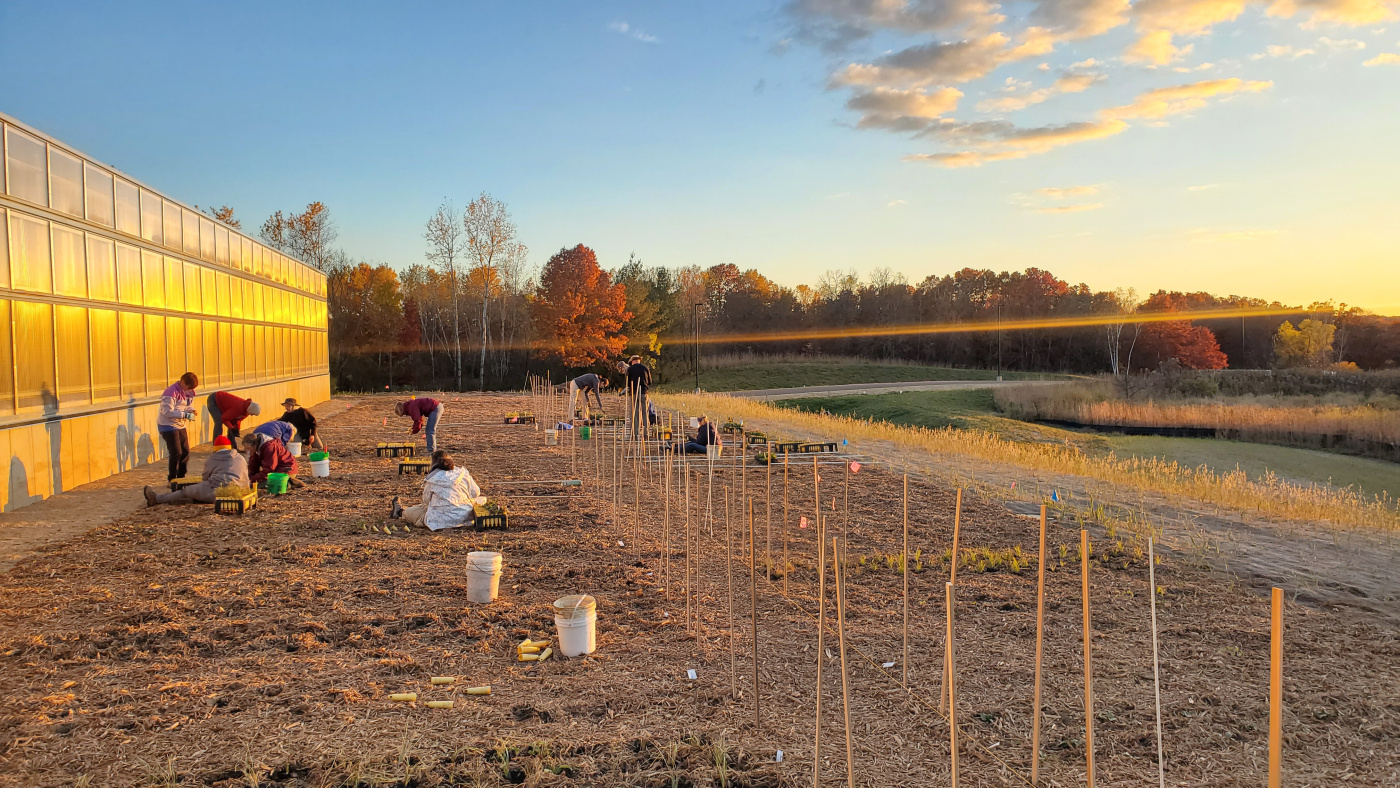
This innovative program evolved from windowsills to a 5,000 square foot greenhouse at Lebanon Hills Regional Park. Since the program’s start in 2017, staff and volunteers have worked to expand the operation to produce over 45,000 native plants annually for local restoration projects throughout the county. Volunteers help to grow more than 100 plant species from a range of ecosystems that support over 5,000 acres of restoration efforts at county parks and trails.
In 2025, the county invested in a greenhouse to help triple production and allow for year-round education and volunteer opportunities. Native plants are an investment, and this work has resulted in more than $500,000 in value to county restoration operations with a projected five-year payback. The greenhouse provides year-round volunteer opportunities for a range of abilities, environmental education for all ages, and an opportunity to engage unique partners like Renacer, a Latina-led women’s group. The county is also working with local indigenous communities to ensure that they are growing culturally significant plants and providing opportunities for programming that serves historically marginalized communities.
Mille Lacs Band of Ojibwe: Water Over Nickel Initiative
Water Over Nickel works to raise awareness about the importance of protecting clean water from the risks from copper nickel mining, particularly in culturally significant waters like Rice Lake and Sandy Lake near a proposed mine in Tamarack, Minnesota. This initiative aims to elevate Indigenous voices and ensure access to clean water.
Their work includes an Upper Midwest Emmy Award-winning documentary, Water Over Nickel. The documentary illustrates the deep connection the Mille Lacs Band of Ojibwe has to their ancestral lands and illuminates the threats the proposed Tamarack nickel mine represents to Minnesota’s pristine watersheds and wild rice.
City of Monticello: Reinvestment in the West Bridge Park playground
The newly revitalized West Bridge Park playground, located just off the Mississippi River, hosts an inclusive, climate-smart design with proximity to affordable housing and important connections to the downtown and river. This reinvestment in the playground includes fully ADA-accessible and multi-age play equipment, wheelchair-friendly surfacing, multilingual signage, and custom mosaics in partnership with local arts group MontiArts.
Made possible in part with a generous donation from the local Lions Club, this reinvestment goes beyond recreation by incorporating green infrastructure to help control stormwater runoff to the river. Permeable surfacing allows water to soak into the ground instead of running off to the river, and native plants and structured soils help to capture and filter stormwater.