
Our staff book club features books that foster thoughtful discussion about the natural world and our role in it. Take a look at what we read this year (including Minnesota author Kao Kalia Yang’s Where Rivers Part) and let us know if you have ideas for what we should read in 2026!
Gathering Moss
by Robin Wall Kimmerer
“Living at the limits of our ordinary perception, mosses are a common but largely unnoticed element of the natural world. Gathering Moss is a beautifully written mix of science and personal reflection that invites readers to explore and learn from the elegantly simple lives of mosses.”
— Oregon State University Press
A Darkness Manifesto
by Johan Eklöf
“In this “well-researched and surprisingly lyrical” (The New Statesman, UK) book, Swedish conservationist Johan Eklöf urges us to appreciate natural darkness, its creatures, and its unique benefits. He ponders the beauties of the night sky, traces the errant paths of light-drunk moths and the swift dives of keen-eyed owls, and shows us the bioluminescent creatures of the deepest oceans. As a devoted friend of the night, Eklöf reveals the startling domino effect of diminishing darkness: insects, dumbfounded by streetlamps, failing to reproduce; birds blinded and bewildered by artificial lights; and bats starving as they wait in vain for insects that only come out in the dark. For humans, light-induced sleep disturbances impact our hormones and weight, and can contribute to mental health problems like chronic stress and depression. The streetlamps, floodlights, and neon signs of cities are altering entire ecosystems, and scientists are only just beginning to understand their long-term effects. The light bulb—long the symbol of progress and development—needs to be turned off.”
—Simon & Schuster
Where Rivers Part: A Story of My Mother's Life
by Kao Kalia Yang
“Born in 1961 in war-torn Laos, Tswb’s childhood was marked by the violence of America’s Secret War and the CIA recruitment of the Hmong and other ethnic minorities into the lost cause. By the time Tswb was a teenager, the US had completely vacated Laos, and the country erupted into genocidal attacks on the Hmong people, who were labeled as traitors. Fearing for their lives, Tswb and her family left everything they knew behind and fled their village for the jungle.
Perpetually on the run and on the brink of starvation, Tswb eventually crossed paths with the man who would become her future husband. Leaving her own mother behind, she joined his family at a refugee camp, a choice that would haunt her for the rest of her life. Eventually becoming a mother herself, Tswb raised her daughters in a state of constant fear and hunger until they were able to emigrate to the US, where the determined couple enrolled in high school even though they were both nearly thirty and worked grueling jobs to provide for their children.
Now, her daughter, Kao Kalia Yang, reveals her mother’s astonishing saga with tenderness and clarity, giving voice to the countless resilient refugees who are often overlooked as one of the essential foundations of this country. “Haunting and painfully relevant” (Booklist), Where Rivers Part is destined to become a classic.”
—Simon & Schuster
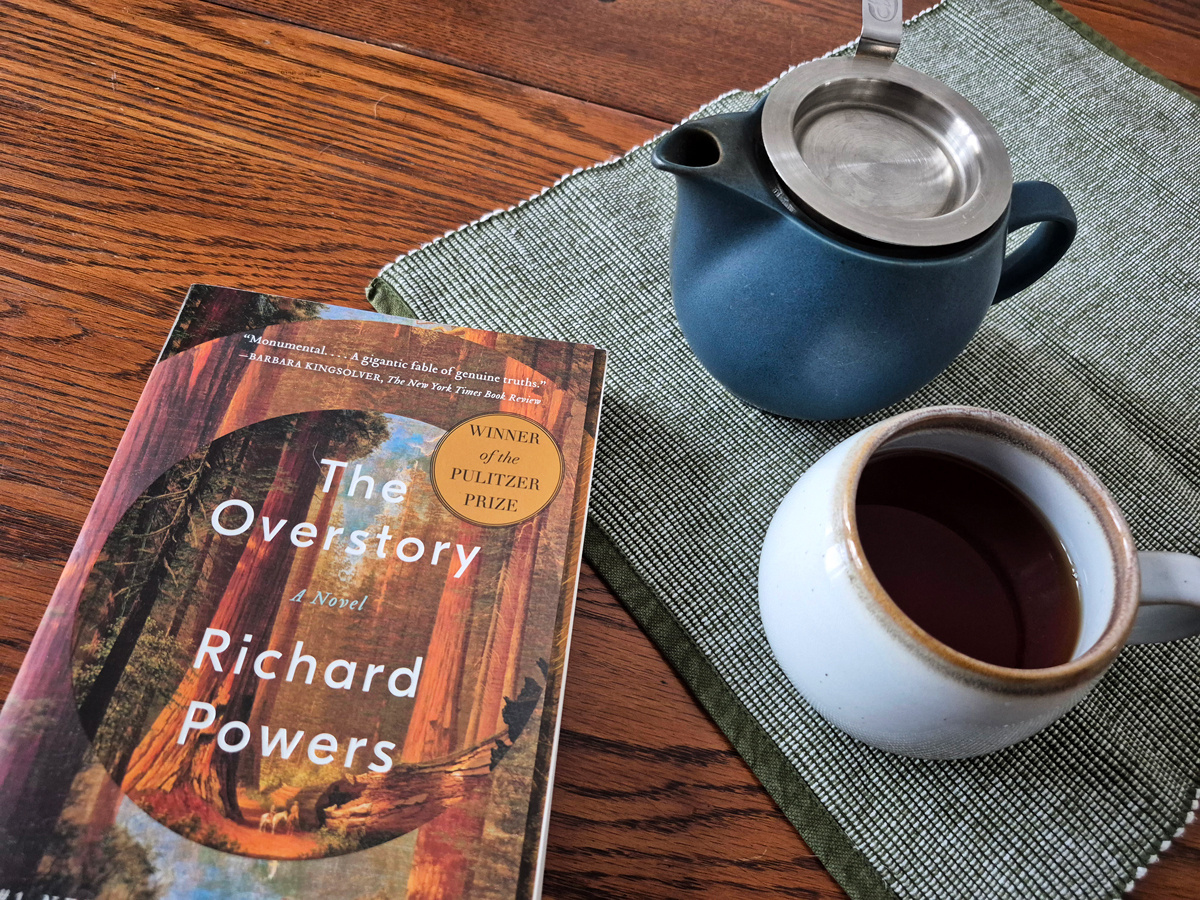
The Overstory
by Richard Powers
“The Overstory, winner of the 2019 Pulitzer Prize in Fiction, is a sweeping, impassioned work of activism and resistance that is also a stunning evocation of—and paean to—the natural world. From the roots to the crown and back to the seeds, Richard Powers’s twelfth novel unfolds in concentric rings of interlocking fables that range from antebellum New York to the late twentieth-century Timber Wars of the Pacific Northwest and beyond. There is a world alongside ours—vast, slow, interconnected, resourceful, magnificently inventive, and almost invisible to us. This is the story of a handful of people who learn how to see that world and who are drawn up into its unfolding catastrophe.”
—W. W. Norton & Company
Next up: What If We Get It Right? Visions of Climate Futures
By Ayana Elizabeth Johnson
“Sometimes the bravest thing we can do while facing an existential crisis is imagine life on the other side. This provocative and joyous book maps an inspiring landscape of possible climate futures.”
—Penguin Random House