
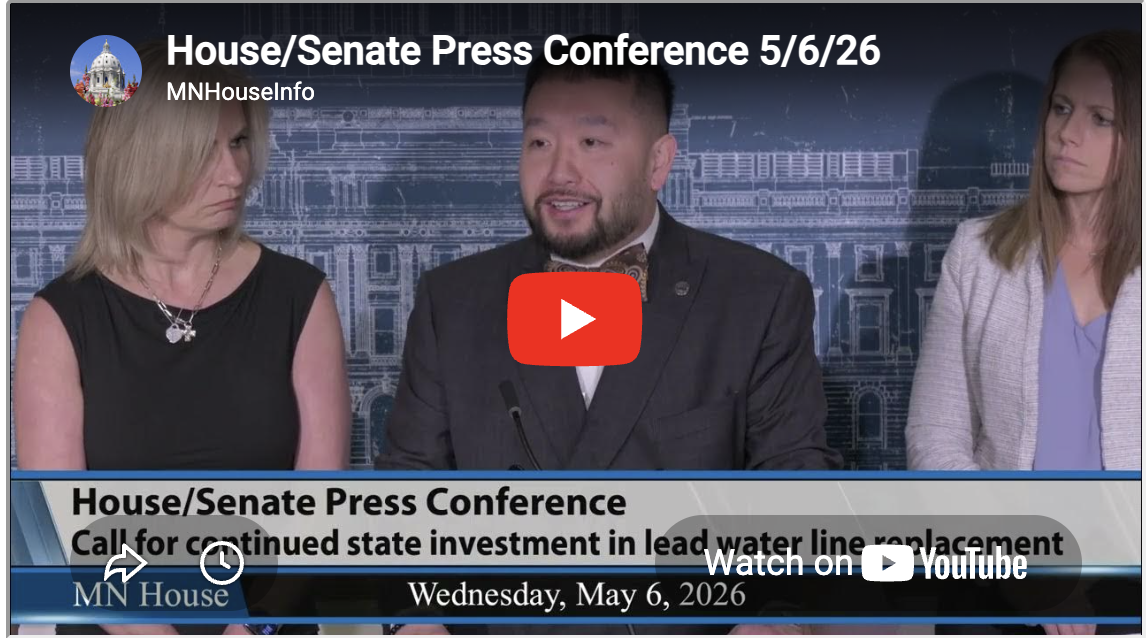
The Minnesota Legislature must act this session or lead pipe removal programs could end. On May 6th, legislative and trade leaders, members of the Coalition of Greater MN Cities, and allies held a press conference to explain the stakes.
House Capital Investment Committee Co-Chairs Representative Mary Franson and Representative Fue Lee agreed on the importance of passing a bonding bill—especially for clean drinking water— but said that negotiations on size and scope were ongoing.
The state and federal funds committed since 2023 (nearly $500 million) may run out at the end of the 2026 construction season. If the Minnesota Legislature doesn't act this session, the lead line removal program—and Minnesota's commitment to replace all lead service lines by 2033—will be at risk. The Minnesota Public Facilities Authority has said the Legislature needs to allocate $250 million to stay on track for the 2033 deadline. Today, Minnesota has an estimated minimum of 100,000 lead service lines. There is no safe level of lead exposure.