
Clean drinking water for every Minnesotan
Any Minnesotan will tell you the Land of 10,000 Lakes actually has more than 11,000 lakes. We also have more than 100,000 miles of rivers and streams, including the headwaters of the mighty Mississippi River, and 13 million acres of surface water.
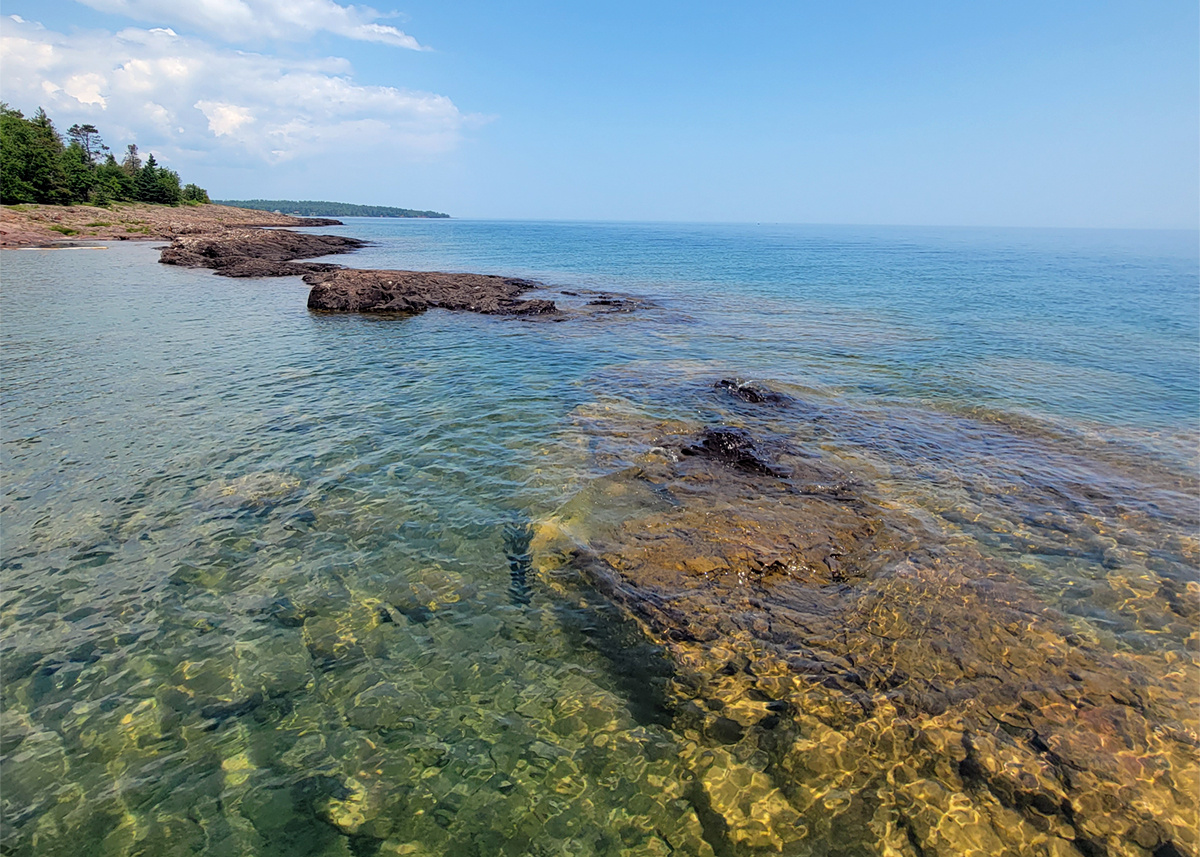
This summer my family has already been lucky enough to take many walks around Grass Lake, sightsee along Lake Superior and jump into Caribou Lake near Lutsen. In this summer issue, while many of us put ourselves back in the water, returning to the lakes and rivers for swimming, fishing, and boating, we’re going to turn our attention to the water we drink.
Every drop of water that reaches your faucet has gone on a journey to get to you. Minnesotans drink water from groundwater wells, lakes, and 2.5 million of us drink from the Mississippi. Our water falls as rain, soaks through urban, suburban, and rural neighborhoods, filters through crops and agricultural lands, and moves through stormwater and wastewater systems.
And sometimes, that path can introduce elements you wouldn’t want in your water glass. It has always been a priority of ours at Conservation Minnesota to make sure we can trust the water we drink is clean and safe.
Look inside for an update on Minnesota’s drinking water—and where we go from here.
—Paul Austin, Executive Director
Your water’s journey
Every drop has a story. Protecting our water takes persistence and looking at the issue from every angle—on the land, underground, and within agriculture and industry.
Agriculture’s impact
Over 70% of nitrate pollution in Minnesota’s waterways comes from agricultural runoff.
Nitrate naturally occurs in the environment and in our bodies. But when too much of it seeps into our water from agricultural runoff, serious problems can follow.
Long term exposure to nitrate in drinking water can lead to health problems, including cancer.
High levels of nitrate can be toxic to aquatic life and cause excessive algae growth and low levels of oxygen in waterways. When nitrate levels are high, there is also a much higher probability of detecting pesticides in water. We’re working for change on multiple fronts:
- Minnesota is updating animal feedlot regulations—an important step toward reducing nitrate pollution statewide.
- Minnesota’s Agricultural Water Quality Certification Program is proving that protecting clean water and farming profitability go hand in hand, with over one million acres voluntarily enrolled across the state.
- New cover crops developed at the University of Minnesota can significantly impact soil erosion, rainwater absorption, and act as a filtration system.
We’ll keep advocating for agricultural practices that reduce pollution, protect our waters, and expand economic opportunities.
The role of wetlands
Minnesota once had more than 18 million acres of wetlands, covering more than a third of our state.
Now, more than half has been lost to agriculture and development, and extreme weather patterns are putting increased pressure on what remains.
This is a concern for water quality because wetlands filter pollution, keeping it from entering our lakes, rivers, and groundwater.
Minnesota has a no-net-loss of wetlands policy—but there is evidence that despite the current legal framework, wetland loss continues. It’s time to reverse the trend.
We know from success in places like Worthington Wells Wildlife Management Area that when sensitive lands above water sources are returned to native wetlands and prairie, water quantity and quality improve significantly, with reduced amounts of pollutants.
We’re calling for a state goal of restoring 1 million acres of wetlands by 2050, prioritizing projects that directly protect community wells and drinking water.
Keeping toxics out of your tap
22 communities in Minnesota have drinking water above the federal PFAS limit.
PFAS—commonly known as forever chemicals—pose significant health risks. Three years ago, Minnesota enacted a nation-leading ban on PFAS—Amara’s Law, named for a young Minnesotan who died from cancer related to PFAS exposure.
In May, our state protections became even more important, as the Environmental Protection Agency (EPA) moved to repeal and delay federal limits on PFAS in drinking water.
We’ll keep advocating for the strictest implementation of Amara’s Law to safeguard the health of our communities and the environment from the dangers posed by forever chemicals.
Thousands of homes across Minnesota are connected to aging lead service lines that can contaminate drinking water.
Along its journey to your faucet, the last stop our drinking water takes are the pipes to your home. Lead is especially dangerous for children, where it can harm brain development and contribute to learning, behavior, and hearing problems. Minnesota has one of the highest rates of lead pipes per capita in the country, with nearly 100,000 lead service lines statewide.
To address this public health threat, Minnesota passed bipartisan legislation in 2023 to replace all lead service lines by 2033 and provided a historic $240 million to begin the work. This effort represents one of the largest investments in safe drinking water infrastructure in state history.
However, continued state and federal funding will be needed to finish the job. In the last legislative session, only $15 million of the proposed $250 million was granted, about 10% of what was needed to stay on track, putting Minnesota’s replacement goal at risk.
We’ll keep advocating for lead pipe funding, holding the state accountable to the goal of 100% replacement by 2033.
Every Minnesotan deserves clean drinking water they can trust. That's a promise Conservation Minnesota will always work to keep.
See this newsletter in a PDF format.